FinOps Certified Practitioner: Complete Guide to Certification | Exam, Discounts & Study Resources
As cloud budgets swell and AI workloads expand, FinOps has become a critical business imperative. FinOps bridges the gap between engineering, finance, and business teams to ensure every dollar spent in the cloud drives maximum value.
This guide breaks down everything you need to know: exam format, costs, official discount vouchers, free study resources, sample questions, and career impact.
Table of Contents
What is the FinOps Certified Practitioner Certification?
The Finops Certified Practitioner Certification is the global benchmark for professionals who manage cloud financial operations. Offered by the FinOps Foundation (a project hosted within the Linux Foundation), this certification validates a candidate’s mastery of cloud financial management principles, collaborative cross-functional practices, and cost optimization methodologies.
- What it is: The FinOps Certified Practitioner (FCP) (historically referenced in older syllabi alongside designations like finops certified practitioner (focp) is a vendor-neutral credential. It demonstrates that an individual understands how to bring accountability, transparency, and financial discipline to public cloud usage.
- Who it is for: It is designed for cloud engineers, DevOps practitioners, IT leaders, finance professionals, procurement specialists, and product managers who interact with cloud budgets, resource allocation, and cloud architecture.
- Prerequisites: There are no formal prerequisites. Anyone with a basic understanding of cloud computing and financial principles can take the exam.
- Key Benefits: Earning the credential proves that you understand the FinOps lifecycle (Inform, Optimize, Operate), can foster collaboration between engineering and finance teams, and can implement governance frameworks to maximize the business value of cloud investments.
If you are navigating official registration channels, you will encounter the official Linux Foundation portal.
Who Should Get the FinOps Certified Practitioner?
Understanding who benefits most from the finops certified practitioner certification helps clarify its career impact across technical and financial domains:
– Systems & Cloud Engineers / DevOps Leaders: To learn how architectural choices directly affect monthly cloud expenditure and to build cost-aware infrastructure.
– Financial Analysts & Procurement Managers: To understand cloud billing constructs, commitment models (Reserved Instances, Savings Plans), and allocation frameworks (tags, accounts, business units).
– Engineering Managers & Cloud Center of Excellence (CCoE) Leads: To establish operational cross-team cadence, unit economics, and governance guardrails.
– Consultants & System Integrators: To validate client-facing expertise in cloud financial management across AWS, Microsoft Azure, and Google Cloud Platform (GCP).
Is the FinOps Certified Practitioner Worth It?
Asking if the finops certified practitioner worth it is common among IT and finance professionals planning their professional development in 2026.
The short answer is yes. As organizational cloud spends grow exponentially, driven further by AI workloads and multi-cloud architectures, cloud cost optimization has become a top priority for C-level executives.
Comparison Across Cloud & Financial Certifications
- AWS Cloud Practitioner: Covers AWS-specific services, general architecture, and basic billing concepts on AWS. In contrast, the finops certified practitioner covers multi-cloud financial operations, organizational alignment, cultural change, and unit economics across all cloud environments.
- GCP Cloud Digital Leader: Focuses on Google Cloud products and digital transformation business cases, whereas FCP focuses on financial operations, accountability, and cloud financial governance models.
Earning this certification signals to employers that you possess both the technical understanding and business acumen necessary to prevent cloud sprawl and optimize cloud return on investment (ROI).
FinOps Certified Practitioner Exam
The finops certified practitioner exam tests your practical and theoretical understanding of the FinOps Framework.
Exam Structure & Breakdown
| Exam Parameter | Details |
|---|---|
| Exam Format | Multiple-choice & multiple-response questions |
| Number of Questions | 50 questions |
| Duration | 60 minutes |
| Passing Score | 75% (38 out of 50 correct answers) |
| Delivery Mode | Online, unproctored via Linux Foundation portal |
| Attempts Included | 3 attempts per registration |
Core Syllabus Domains
Understanding FinOps & Cloud Open Data Framework (~20–25%):
Definition of FinOps, principles, cultural alignment, and standard billing formats like FOCUS (FinOps Open Cost and Usage Specification).
FinOps Lifecycle (~35–40%):
Detailed knowledge of the three continuous phases:
- Inform: Visibility, allocation, benchmarking, budgeting, and forecasting.
- Optimize: Rate optimization (commitments, discounts) and usage optimization (rightsizing, turning off idle resources).
- Operate: Continuous improvement, organizational alignment, tracking KPIs, and integrating FinOps into engineering workflows.
FinOps Personas & Stakeholders (~15%):
Roles of Executives, Engineering, Finance, Procurement, and FinOps Practitioners.
FinOps Capabilities & Domains (~20–25%)
Answering operational questions regarding unit economics, anomaly detection, chargeback vs. showback, and policy enforcement.
The overall exam difficulty is moderate. While questions are not deeply mathematical, they require a clear understanding of scenario-based choices (e.g., deciding whether an action belongs in the Inform or Optimize phase).
Wondering how to prepare for the FinOps Practitioner Certificate and pass the exam on your first attempt? Our complete FinOps Certified Practitioner Certification Guide covers everything you need to succeed, from the official exam structure and passing score to study resources, practice questions, certification costs, discounts, vouchers, and scholarships.
FinOps Certified Practitioner Exam Cost
Planning your budget for certification requires understanding the standard fees and regional considerations.
Standard Pricing Overview
- Standard Exam Fee: The finops certified practitioner exam cost is $325 USD for the standalone exam (which includes 3 exam attempts).
- Course + Exam Bundle: $500 USD (includes the self-paced official training course and 3 exam attempts).
- For candidates asking about the finops certified practitioner exam cost in india, the cost remains $325 USD (approximately ₹27,000–₹28,000 INR depending on exchange rates and applicable taxes).
Retake Policy
Unlike many certification bodies that charge full price for a retake, your initial registration fee covers up to 3 attempts within a 12-month period from the date of purchase.
FinOps Certified Practitioner Discount Codes
We are excited to announce that the FinOps Foundation has partnered with FinOps Weekly to offer an exclusive 20% discount on all FinOps certifications for our readers using code FINOPSWEEKLY_20
You can use our dedicated community finops certified practitioner discount code at checkout to save instantly on your exam enrollment.
Discount Code: FINOPSWEEKLY_20
Free FinOps Certified Practitioner Course
Candidates seeking a finops certified practitioner free course can access several official community resources:
- FinOps Open Framework (
framework.finops.org): The entire core curriculum, domain descriptions, capabilities, and persona guides are fully accessible for free online. - Linux Foundation / edX Introductory Courses: Free audit options are available for foundational courses such as Introduction to FinOps, providing an overview before sitting for the main exam.
- FinOps Foundation Community Content: Free webinars, working group whitepapers, and monthly community calls hosted by the FinOps Foundation offer extensive real-world learning materials.
Best FinOps Study Materials
Preparing effectively requires relying on authoritative materials rather than unverified third-party files.
Official Documentation (FinOps Framework): The primary study source is framework.finops.org. Reviewing all capabilities, phases, and principles is essential for passing.
Official Training Course: The self-paced Linux Foundation course offers structured video modules, reading materials, and module quizzes.
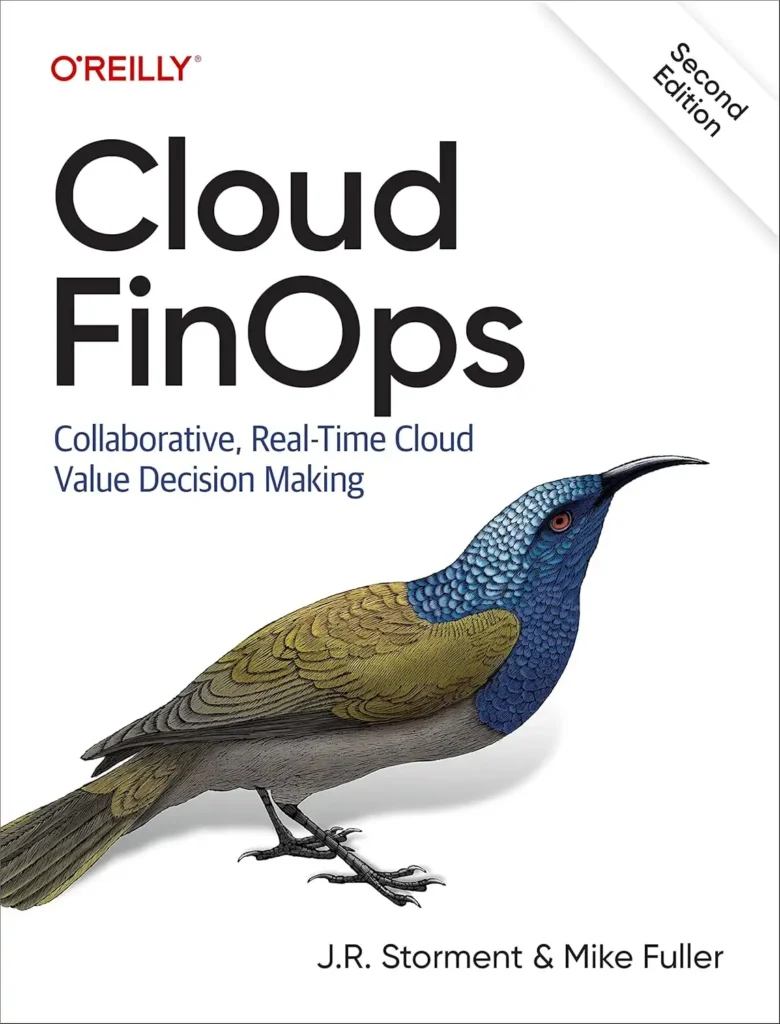
Book – Cloud FinOps (O’Reilly): Written by J.R. Storment and Mike Fuller, this book serves as the foundational text for the FinOps movement.
Avoid Illegal Dumps: Be cautious of websites offering downloadable PDFs claiming to be a finops certified practitioner certification exam questions and answers. These sources are often outdated, inaccurate, and violate the candidate code of conduct. Rely instead on official framework documentation, study guides, and legitimate practice quizzes.
Sample Exam Questions
Below are 15 sample finops certified practitioner exam questions modeled after the official exam format (these are sample questions, you won’t find these in the exam)
- What is the primary goal of FinOps?
- A) To reduce cloud spending to zero.
- B) To help teams drive business value through cloud financial management.
- C) To automate all cloud infrastructure deployment.
- D) To eliminate finance teams in favor of engineering-driven budgeting.
- Answer: B
- Which FinOps phase focuses on visibility, budgeting, and allocation?
- A) Optimize
- B) Operate
- C) Inform
- D) Plan
- Answer: C
- What is the key difference between Showback and Chargeback?
- A) Showback charges real money; Chargeback is just informational.
- B) Showback provides cost visibility without cross-charging; Chargeback directly bills costs back to business unit budgets.
- C) Showback is for AWS; Chargeback is for Azure.
- D) Showback applies only to hardware; Chargeback applies to cloud.
- Answer: B
- In the FinOps Framework, what is an example of ‘Rate Optimization’?
- A) Rightsizing an underutilized virtual machine.
- B) Purchasing Committed Use Discounts (CUDs) or Reserved Instances (RIs).
- C) Deleting unattached storage volumes.
- D) Setting up budget alerts.
- Answer: B
- Which principle best reflects FinOps governance?
- A) Centralized control of all cloud deployments.
- B) Everyone takes ownership for their cloud usage.
- C) Finance makes all technical architectural decisions.
- D) Engineering ignores costs until end-of-quarter audits.
- Answer: B
- What is the main purpose of Unit Economics in FinOps?
- A) Measuring total cloud spend month-over-month.
- B) Measuring cloud costs relative to a specific business metric (e.g., cost per active user or cost per transaction).
- C) Calculating tax rates across different cloud regions.
- D) Reducing virtual machine instance costs by 10%.
- Answer: B
- What does FOCUS stand for in modern cloud cost management?
- A) Financial Operations Cost and Usage Specification
- B) FinOps Open Cost and Usage Specification
- C) Federal Organization Cloud Usage Standard
- D) Flexible On-Demand Cost Optimization System
- Answer: B
- Which team persona is typically responsible for executing resource rightsizing?
- A) Procurement
- B) Engineering / Operations
- C) Executive Leadership
- D) Accounts Payable
- Answer: B
- During which FinOps phase are continuous operational rhythms and KPIs evaluated?
- A) Inform
- B) Operate
- C) Optimize
- D) Design
- Answer: B
- What type of cloud cost is characterized by unpredictable, usage-based billing?
- A) Capital Expenditure (CapEx)
- B) Operational Expenditure (OpEx)
- C) Fixed Amortized Asset
- D) Static Overhead
- Answer: B
- Why is tag compliance critical in the Inform phase?
- A) It speeds up virtual machine boot times.
- B) It enables accurate cost allocation to specific business units, projects, or environments.
- C) It grants root IAM access to engineering teams.
- D) It automatically grants provider discounts.
- Answer: B
- Which of the following is considered ‘Usage Optimization’?
- A) Applying a 3-year Savings Plan.
- B) Negotiating custom enterprise contract rates with a cloud provider.
- C) Scheduling non-production servers to turn off outside business hours.
- D) Converting currency exchange rates on invoice payments.
- Answer: C
- A sudden, unexpected spike in cloud spend is best categorized as what?
- A) Cost Anomaly
- B) Amortization variance
- C) Planned capacity expansion
- D) Rate shift
- Answer: A
- Who drives FinOps cultural adoption within an organization?
- A) Only the CFO.
- B) A centralized or dedicated FinOps team collaborating with cross-functional stakeholders.
- C) Third-party cloud auditors exclusively.
- D) The cloud provider’s support team.
- Answer: B
- What is ‘Fully Allocated Cost’?
- A) Cloud spend that excludes all taxes and fees.
- B) Cloud spend where shared costs (e.g., central support, shared databases) are distributed across business units.
- C) The list price of a cloud resource prior to discounts.
- D) Spend that only applies to compute infrastructure.
- Answer: B
Frequently Asked Questions
Is FinOps Certified Practitioner difficult?
The exam is moderately challenging. It assesses practical knowledge and conceptual understanding of FinOps processes rather than deep technical coding or complex mathematics.
How long should I study?
Most candidates with prior cloud experience require 10 to 20 hours of dedicated study across 1 to 3 weeks to review the framework documentation and pass the exam.
Is the certification valid forever?
No. The certification is valid for 2 years (24 months). To maintain active status, candidates must retake the exam or earn continuing education units prior to expiration.
Can I take it online?
Yes. The exam is delivered 100% online through the Linux Foundation portal and can be taken from any location with a stable internet connection.
Can I fail, and how much does a retake cost?
If you fail on your first try, you can retake the exam. Your registration fee includes 3 total attempts, so retakes within those attempts do not incur additional costs.